
Fine Robusta vs Arabica: Why Nordic Coffee Snobs Are Missing Out
6 September 2026 · Trung Nguyen · ☕ 4 min read
For decades, European baristas dismissed Robusta as filler for cheap blends. Then Vietnam started scoring 80+ points on the SCA scale. Here's what changed — and why your next latte should be a fine Robusta.
If you learned about coffee anywhere in the last twenty years, you learned two rules. One: Arabica is the good stuff. Two: Robusta is the harsh, bitter, over-caffeinated bean that shows up in supermarket blends and vending machines. Those rules aren't wrong — they're just very, very out of date.
The category that shouldn't exist (but does)
In 2010, the Coffee Quality Institute did something quietly radical: it created the Fine Robusta grading protocol. It's the same cupping methodology used for Arabica — 100-point scale, blind flights, ten certified attributes — applied to the world's second-most-grown coffee species. To qualify as "fine," a Robusta must score 80 or above. Below 60 is commercial. Between 60 and 80 is premium. Above 80 is a different animal entirely.
The reason you've probably never tasted one: fewer than 2% of Robusta harvests worldwide reach the fine grade. And of that tiny slice, the overwhelming majority stays in the domestic Vietnamese market or gets absorbed by Italian espresso houses who quietly blend it into their most famous roasts without ever naming it.
What "fine" actually tastes like
A cupped fine Robusta from the Central Highlands of Vietnam doesn't taste like the Robusta you know. In the cup you'll find:
- Deep cocoa nib and dark chocolate — the same descriptors you'd write for a natural-process Ethiopian, minus the fruit acidity
- Toasted hazelnut, marzipan, brown sugar — the caramel-heavy end of the flavour wheel
- Low, rounded acidity — where Arabica sings, fine Robusta hums
- A dense, syrupy body that clings to the roof of your mouth like a good stout
None of that reads "harsh." Because when Robusta is grown properly — shaded, at altitude, hand-picked ripe, and processed as carefully as any specialty Arabica — it stops being the caffeine muscle car and becomes the black-tie cousin nobody knew Arabica had.
The caffeine difference (this is why your latte works better)
Fine Robusta contains 2.2 to 2.7% caffeine by weight. Arabica sits around 1.2%. That's roughly double. What that means in practice: a Robusta espresso can hold its own against milk in a way most Arabica shots can't. The chocolate notes push through the foam. The body doesn't dissolve. Your latte tastes like coffee at the bottom, not like warmed milk with a suggestion.
This is exactly why Neapolitan espresso — the espresso most of us think of as the definition of espresso — has historically been 20–40% Robusta. It's not a corner cut. It's a design choice.
Why Vietnam, specifically
Vietnam produces roughly 40% of the world's Robusta, and virtually all of the fine grade. The reason is geography. The Đắk Lắk highlands, at 500–800 metres of volcanic red-earth altitude, sit inside a narrow band of latitude and rainfall that Robusta adores. Coffee arrived here in the 1850s with French Catholic missionaries; the country's export economy was rebuilt around it after 1986. Today the third and fourth generation of coffee families are the ones taking their vườn — their small farm plots — and moving them, deliberately, up-market.
Places like Cầu Đất, Buôn Ma Thuột and Đắk Nông are what Napa was to California wine in 1980: everybody local knows it's serious; nobody outside has caught up yet.
How to try it (without switching your whole routine)
The easiest gateway is a 50/50 blend: half your usual Arabica, half a fine Robusta. Grind together, brew as normal. You'll notice the crema turns golden-hazel instead of pale beige, the body thickens, and the aftertaste stays chocolatey for a full ten minutes after the cup is empty. That's the fine Robusta signature.
From there, some drinkers stay 50/50 forever. Others go 100% fine Robusta for milk-based drinks and keep Arabica for filter. Either way is correct.
The Nordic angle
Finland, Sweden, Norway, Denmark — the four countries with the highest per-capita coffee consumption in the world — are also the four countries where "specialty" has come to mean, almost exclusively, light-roast Arabica filter coffee. That's a beautiful category. It's also incomplete. Milk-based drinks make up 70% of Nordic café orders. Filter roast in a milk drink is often overwhelmed by the milk. Fine Robusta isn't. If you run a café and you want your flat whites to taste like something at the bottom of the cup instead of just at the top, this is the ingredient you're missing.
What to try first
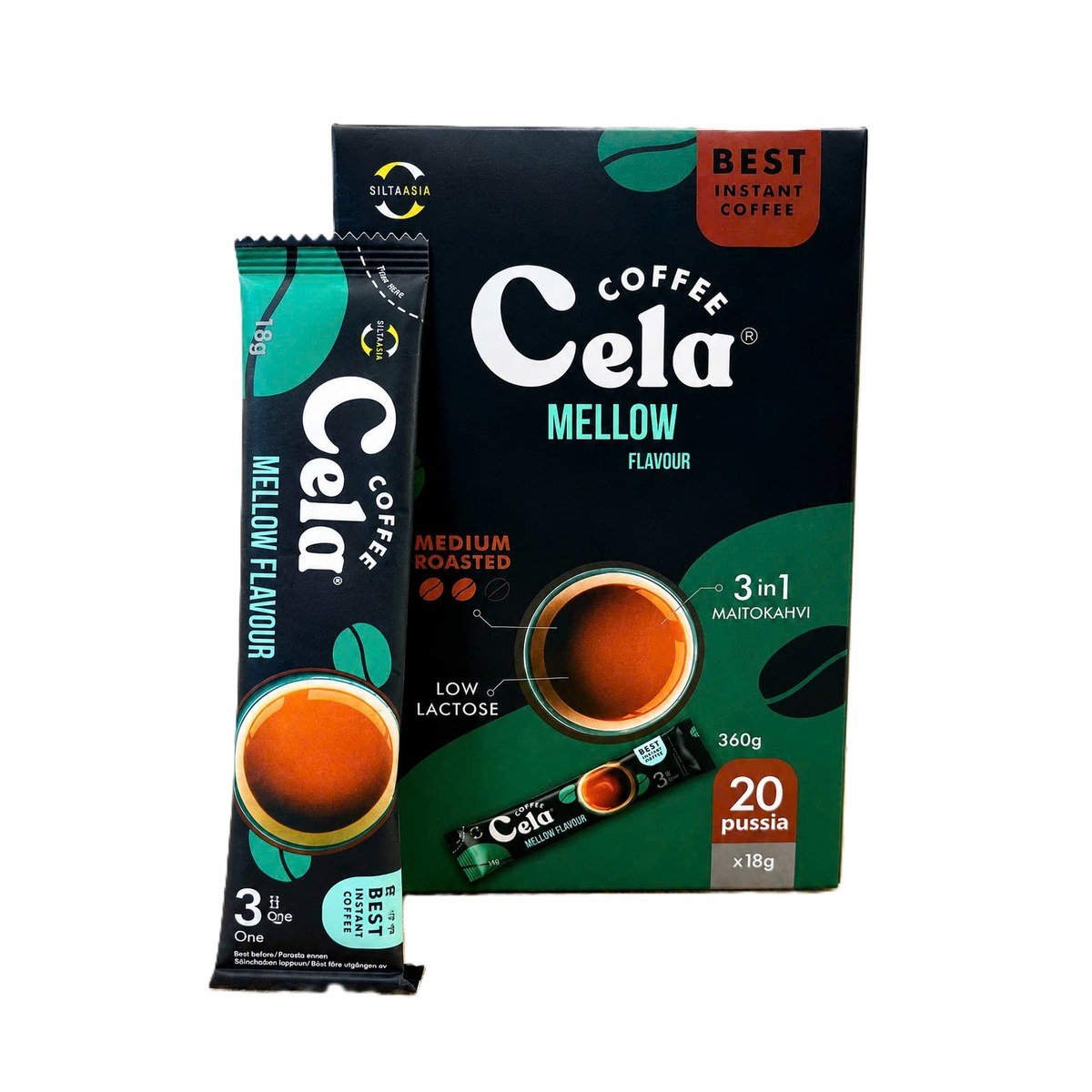
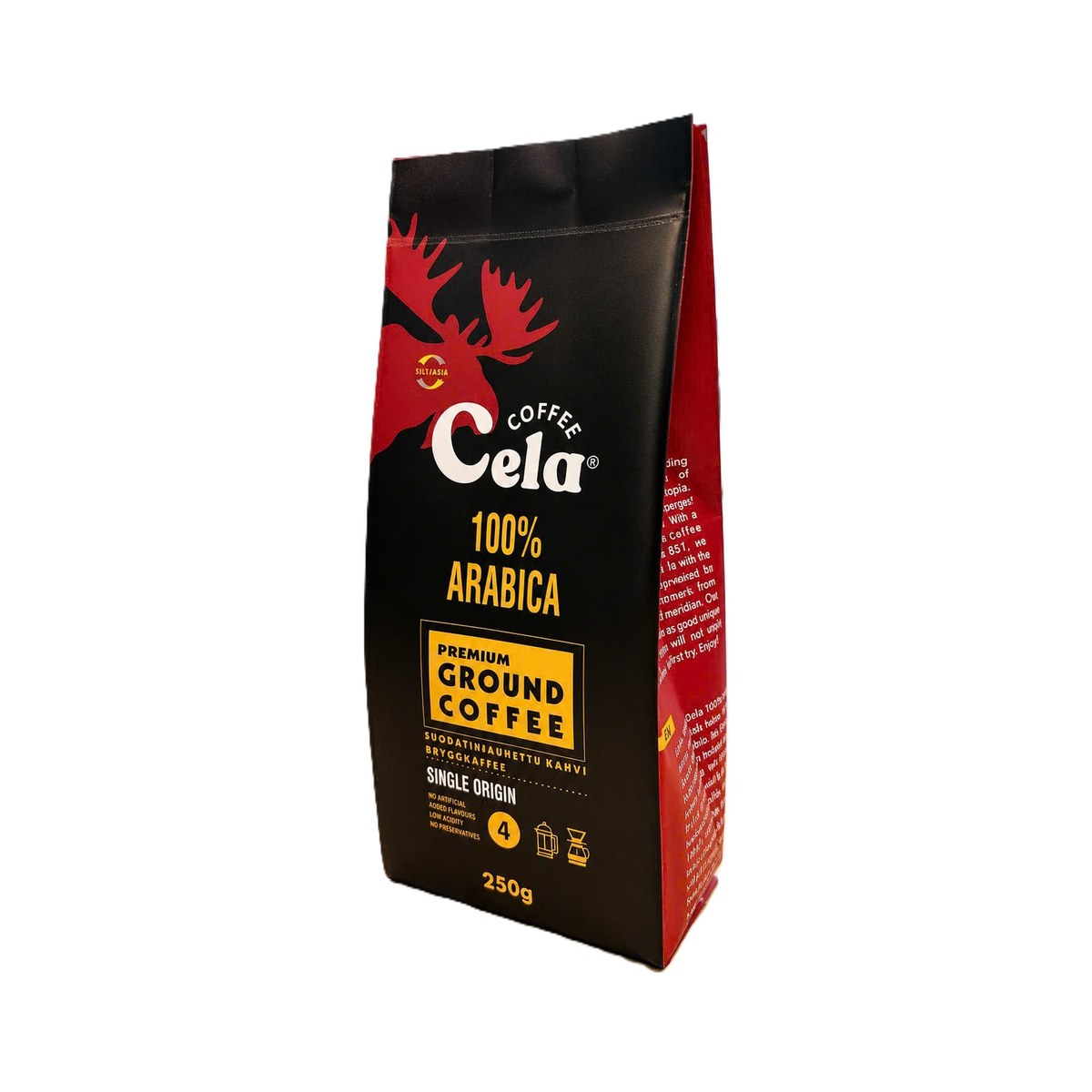
At Cela Coffee we work with trusted sourcing partners in Vietnam who ensure every lot we import comes from fair-trade certified small-holder farms in Buôn Ma Thuột — hand-selected fine Robusta that cupped 82+ before it ever left the country. Our Robusta Ground Coffee and Signature Blend are the two easiest starting points — the Signature is a 60/40 fine Robusta / natural Arabica designed for milk drinks, and the pure Robusta is for anyone who wants to taste the source material clean. Both are roasted the day they leave us.
Try it once. It will not taste the way you're expecting.
Try it with our beans